

Such detailed reporting can significantly impact tax liabilities as well since income taxes depend on the net income presented by businesses in their financial documentation. Absorption costing meticulously assigns both fixed and variable overheads to individual products, offering a comprehensive view of total production costs that sharpens financial decision-making. GAAP requirements for inventory valuation and aims at providing a complete picture of production expenditures. Each product absorbs a share of manufacturing overhead costs and expenses, leading to more accurate cost of goods sold (COGS) figures on financial statements.
Absorption costing steps
Thus, in this step fixed overhead costs can be reapportioned or adjusted for sharing fairly between these service departments or cost centers. The entire issue of overhead absorption can be reduced by using just-in-time systems to reduce the amount of inventory on hand at the end of an accounting period. By doing so, a case can be made to charge all overhead costs to expense as incurred. Developing cost pools is absorption costing formula a fundamental step in the absorption costing process.

The under absorption and over absorption of overhead
- Absorption costing has some limitations, and it can be challenging to assess the impact of changes in production levels on profitability since fixed overhead costs remain constant.
- This means that the cost of inventory is more accurately reflected, which is useful for businesses that need to report inventory values on financial statements.
- Income increases as production increases and decreases as production decreases.
- We notice that the amount offered will not even cover the cost of the products.
- Further, the following data is available regarding the cost pools and activities of production.
- Using absorption costing (or a similar full costing method) helps businesses comply with these tax regulations, ensuring that businesses deduct costs appropriately when selling inventory.
The absorption costing method is typically the standard for most companies with COGS. Auditors and financial stakeholders will require it for external reporting. Small businesses may also be required to use absorption costing for their tax reporting depending on their type of business structure. Depending on a company’s level of transparency, an income statement using absorption costing may break variable direct costs and fixed direct costs into two line items or combine them to report a Suspense Account comprehensive COGS. The variable direct costs and fixed direct costs are subtracted from revenue to arrive at the gross profit in either case. When it comes to the pros and cons of absorption costing, it’s essential to consider the relevance for inventory management.
Absorption Costing vs Marginal Costing: Key Differences Explained

If absorbed overheads are lower than the actual overheads, then there is an under-absorption. If absorbed overheads are higher than the actual overheads, then there is an over-absorption. After allocation, apportionment, and reapportionment, the costs should be absorbed using a suitable overhead absorption rate. You’ll need to be meticulous here – precision matters in making sure every penny spent contributes properly towards creating each product or service offered. Leading seamlessly from determining individual cost usages, we transition into allocating overhead costs effectively across different departments or products. Creating accurate cost pools demands thoroughness; omitting expenses can lead to undercosting, while over-assigning costs might result in overcosting.
- Fixed overhead costs are constant and do not change with the level of production.
- Absorption costing is also known as full absorption costing or full costing.
- This strategic allocation of overhead costs forms the backbone of product pricing and profitability assessments, enabling businesses to refine their financial strategies effectively.
- Using an Absorption Cost Calculator ensures that your business adheres to these standards and reports accurate cost information.
- Assigning costs involves dividing the usage measure into the total costs in the cost pools to arrive at the allocation rate per unit of activity, and assigning overhead costs to produced goods based on this usage rate.
However, it is not required under accounting standards such as the US GAAP rules. Customized production and seasonal demand mean that production levels change all the time. Absorption costing does not provide control over operational efficiency in these situations. Also, the full costing method does not require sophisticated software or special skills. Thus, it is less costly and less complicated as compares to the ABC method.
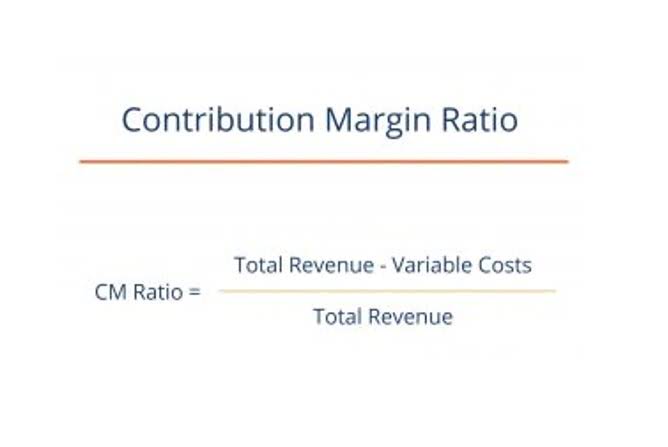
They appear as a current asset under “Inventory” on your company’s balance sheet. The absorption cost method is the conventional costing method that lumps all fixed overhead costs. Contrarily, the COGS figure will be lower in the full costing method as it also considers the fixed overhead costs. Marginal costing and absorption costing are both widely used inventory valuation methods. Even if a company does not bookkeeping need to use marginal costing for reporting purposes, it is used for pricing decisions. A key line item in this method is the adjustment for under or over-absorption costs.
No, absorption costing includes both fixed and variable costs in the cost of goods sold, whereas variable costing only includes variable costs. Overhead costs, both fixed and variable, are included in the absorption costing method to allocate a share of these costs to each unit produced, impacting the total cost per unit. However, its limitations, such as the risk of overproduction and challenges in overhead allocation, necessitate careful interpretation and complementary use of other costing methods like variable costing. As businesses embrace technological advancements, absorption costing is becoming increasingly efficient, enabling companies to make informed decisions in a competitive market. Understanding and effectively applying absorption costing principles can help businesses achieve long-term financial stability and success.